
24-Hour Live-in Care · Carlisle & Cumbria
Live-in Care in Carlisle — 24-Hour Support in the Home You Love
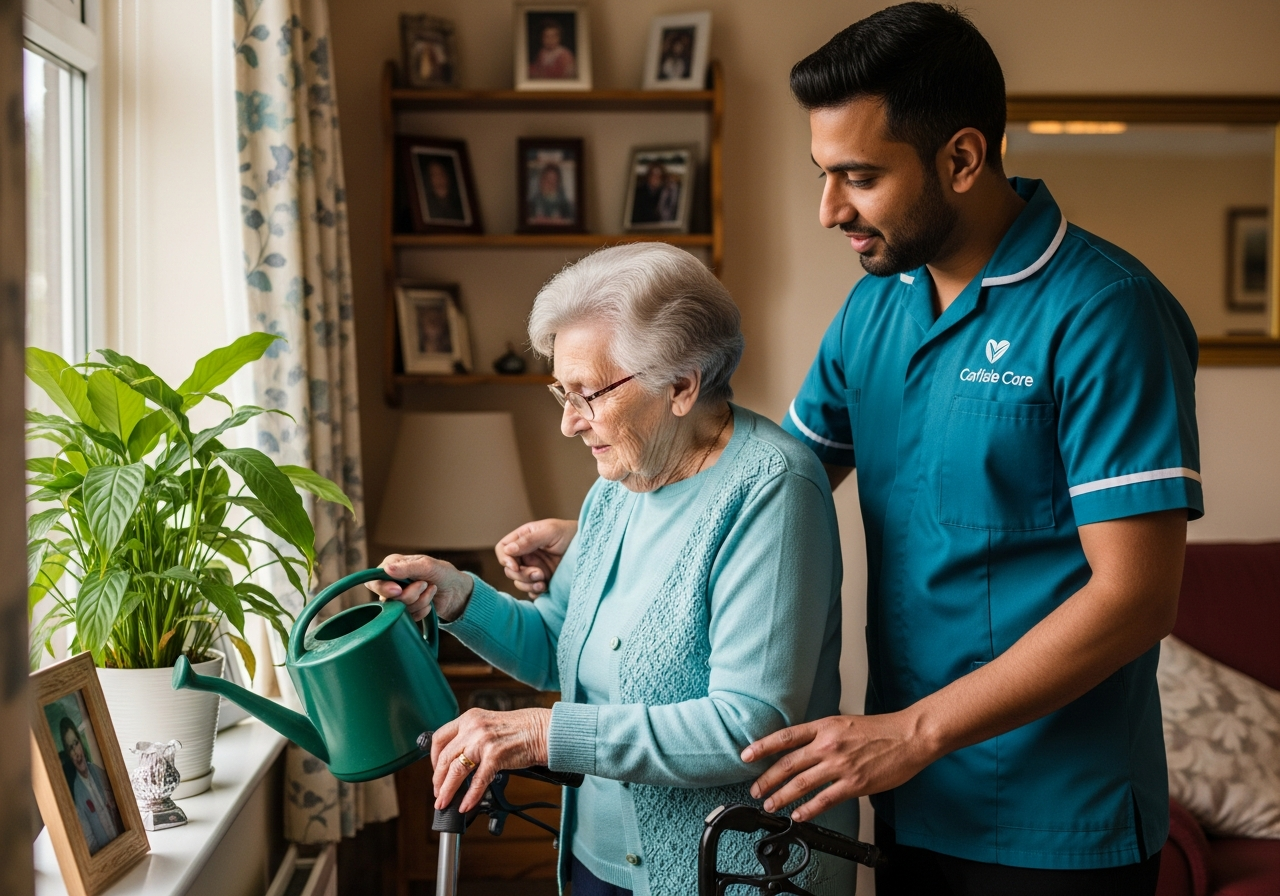
A dedicated, trained carer living in your home — providing continuous support, safety, and companionship around the clock. Live-in care is a genuine, trusted alternative to residential care, allowing your loved one to remain where they belong.
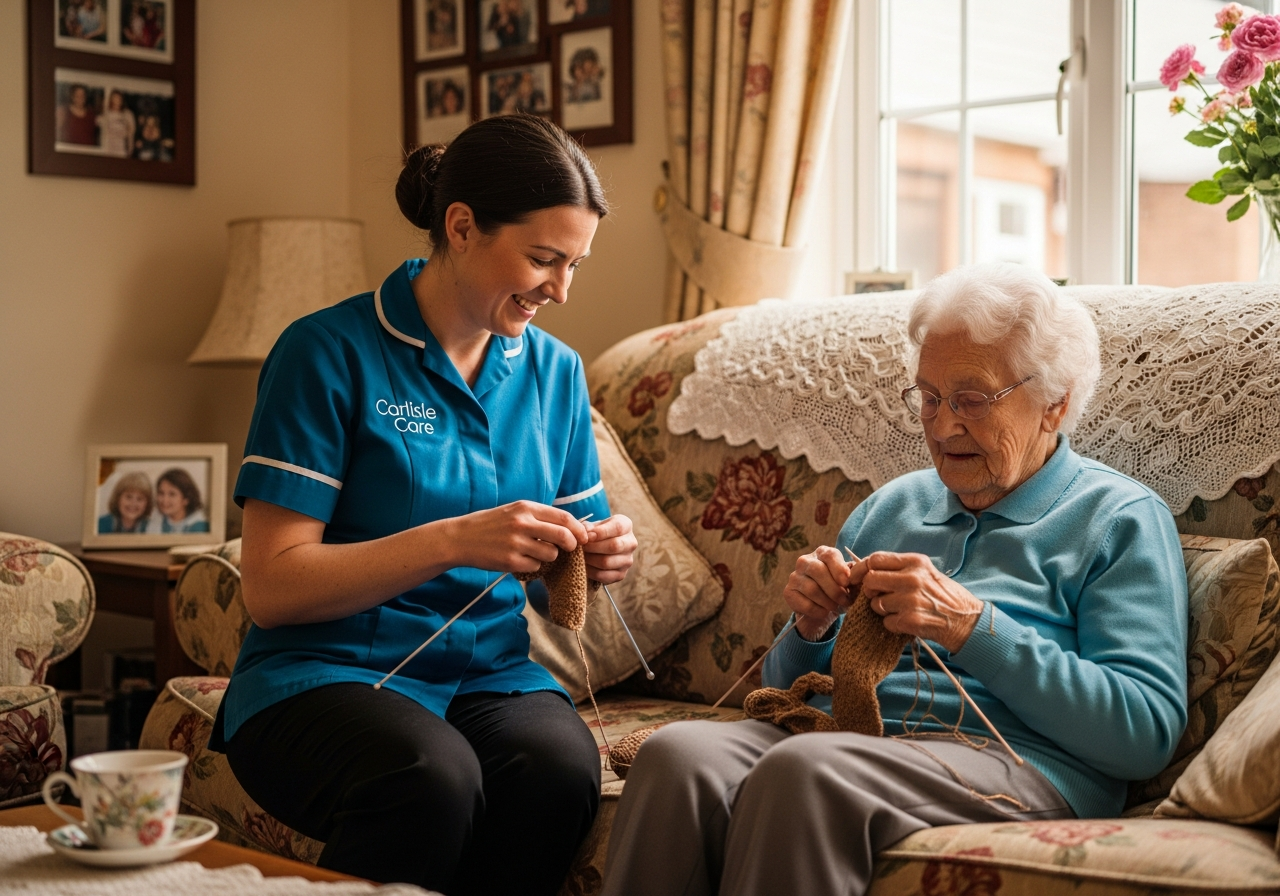

Is This Right for You?
Who Our Live-in Care Service Supports
Live-in care is most appropriate when someone requires a consistent, all-day presence — whether for safety, complex care needs, advanced conditions, or simply the reassurance of never being alone.
Older Adults Needing Constant Support
Older people whose care needs have progressed beyond what visiting carers can safely provide — and who need a consistent, trusted presence throughout the day and night.
Advanced Dementia or Complex Conditions
Individuals living with advanced dementia, Parkinson's disease, or other complex conditions where safety, routine, and a familiar carer presence are essential at all times.
Post-Surgery or Stroke Recovery
People recovering from major surgery, a stroke, or a significant health event — who need intensive, continuous support during recovery without the disruption of a hospital or care home environment.
Families Choosing Home Over a Care Home
Individuals and families who have made the decision — or wish to explore the possibility — of remaining at home rather than moving into residential care, and who need full-time, dedicated support to make that possible.
Know Your Options
Live-in Care Compared to a Residential Care Home
Many families weigh up live-in care against a residential care home. Here is an honest, clear comparison of the two options across the factors that matter most.
Costs vary depending on individual care needs. We provide clear, transparent pricing during the free home assessment.
A Typical Day
What a Day Looks Like With a Live-in Carer
Live-in care is built entirely around the individual's rhythm — not an institutional schedule. Here is a sense of what a typical day might look like, though every client's day is shaped by their own preferences and needs.
Wake-Up and Morning Routine
The carer is there from the start of the day — assisting with washing, dressing, and grooming at a calm, unhurried pace. Breakfast is prepared to preference, medication is prompted, and the day begins in familiar comfort.
Activities, Conversation, and Fresh Air
Whether it is reading, a gentle garden walk, a favourite television programme, or conversation over tea — the morning is shaped by what the person enjoys. The carer is present, engaged, and available.
Lunch Prepared and Served
A fresh, nutritious lunch prepared to individual taste and dietary need. The meal is shared where the person prefers — at the table, in the living room, or in the garden on a warm day.
Appointments, Errands, or Rest
The carer accompanies to appointments, handles shopping, supports hobbies, or simply sits alongside in comfortable quiet — following the individual's pace entirely.
Evening Meal and Wind-Down
Supper is prepared, medication is given, and the evening routine begins at the person's chosen time — television, a book, a phone call with family, or simply a peaceful end to the day.
Rest Period — On Call for Emergencies
The carer has a designated overnight rest period in their own room. They remain on call throughout the night — able to respond immediately to any need, concern, or emergency.
What We Provide
What Is Included in Live-in Care
Our live-in carers provide comprehensive, continuous support — everything needed to live well, safely, and comfortably at home, around the clock.
Dedicated matched carer — A single carer chosen for compatibility — not rotated from a pool.
24-hour availability — Present and available throughout the day, with on-call overnight cover.
Full personal care — Bathing, dressing, grooming, continence care, and daily hygiene support.
Meal preparation, three times daily — Fresh, nutritious meals planned and cooked to individual taste and dietary need.
Medication management — Prompting, administration, and health monitoring throughout the day.
Domestic support — Housekeeping, laundry, bed changing, and home management.
Companionship and social engagement — Genuine daily connection, conversation, and shared activities.
Grocery shopping and errands — Regular shopping completed independently or with accompaniment.
Accompaniment to appointments — GP, hospital, optician, and community visits.
Emergency response overnight — Immediate response to any overnight need or emergency.
Family communication and updates — Regular updates to designated family contacts and care reviews.
Pet care support — Feeding, walking, and caring for the client's pet as part of the daily routine.
How We Match
How We Find the Right Carer for Your Home
The relationship between a live-in carer and the person they support is unlike any other care relationship. We take matching seriously — because the right person makes all the difference.
Free Home Assessment
We begin with a thorough home assessment — understanding the person's care needs, personality, interests, daily routine, and what they are looking for in a carer. This shapes everything that follows.
Carer Identification
We identify carers from our team whose experience, personality, interests, and communication style align with the individual. Care compatibility matters as much as clinical suitability.
Introduction and Agreement
We introduce the proposed carer to the client and family — explaining their background, experience, and approach. Any concerns are discussed openly before care begins.
Care Begins — and Evolves
The carer moves in and the care plan is put into action. We review regularly and remain available at all times — adjusting the match or the plan if anything needs to change.
Sleeping Arrangements — What to Know
A live-in carer requires their own bedroom — a private, comfortable space where they can rest during their designated overnight period. This is a standard requirement for all live-in care arrangements and is discussed in detail during the home assessment.
The carer's rest period is typically overnight, during which they remain on call — able to respond immediately to any need or emergency. They are not unavailable; they are resting within the home, close by, and ready when needed.
During the day, the carer is fully active and present. Their personal time is a short, agreed daily break — during which the client should be safe and comfortable without direct support. This is discussed and planned at the assessment stage.
“We were absolutely determined that Dad was not going into a care home. Carlisle Care made it possible for him to stay at home until the end — in his chair, in his garden, with his cat. His carer became part of the family. We cannot put into words how grateful we are.”
— Caroline B., Scotby, Carlisle
→ Read More Family Reviews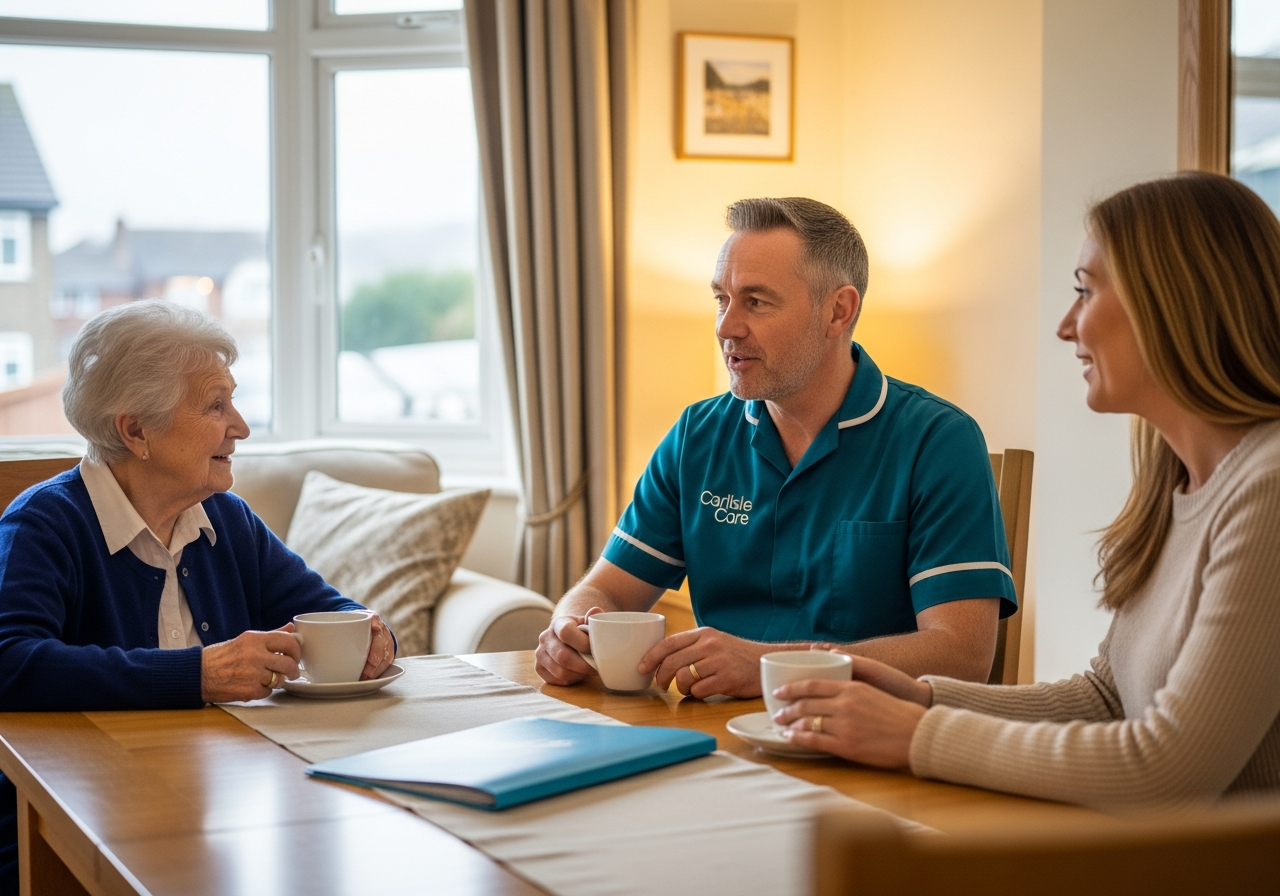
Common Questions
Live-in Care FAQs
Related Services You May Also Need
Dementia Care
Specialist dementia support — often the primary reason families choose live-in care, providing a consistent, familiar presence at all times.
Learn More →Palliative & End-of-Life Care
Compassionate live-in support during the final stage of life — allowing your loved one to remain at home, in comfort and dignity.
Learn More →Respite Care
Short-term live-in cover for family carers — giving you a planned break while your loved one continues to receive consistent, high-quality care at home.
Learn More →